Booking a seat on a public course in Sydney is simple. The date is published, the enrolment is open, and the room includes people from other organisations. None of that shows whether the managers who share a team will handle their own meeting any differently afterwards.
For a Sydney team the choice is between two products. One is an in-house workshop for a single organisation. The other is an open course that takes whoever enrols, even when the venue is in Sydney. Settle that choice before a proposal arrives. Collective Campus sets out the in-house version on the leadership development workshop page. The checklist that applies in any Australian city is in how to choose a leadership development workshop in Australia. This note stays with Sydney: the offices, a team split across rooms, and what people should leave with.
What this workshop is for a Sydney team
It is for people who already lead, or who are about to, inside one organisation. In Sydney that is often an intact leadership team, or a cohort of managers who share an employer and do not sit in one building. The material is work those people already have: a decision that gets reopened, a hard conversation, or a change they are leading across more than one office.
An open public course in Sydney is a different product. It has a date, a public enrolment, and a room of people who do not share a manager, a policy or a meeting. The exercise has to stay generic. That can be a fair way for one person to learn a method, and a fair way to hear how managers in other organisations handle a similar problem. It is a weak way to change how one named team works together after the session. Holding the course in Sydney does not turn it into an in-house workshop.
What to look for
Judge the session by who is actually in it, and by what is still true when people are back at their own desks.
- The proposal names the hub office for this team, and names who will not be in that room.
- The material is a live situation from this organisation. A case the facilitator carried in is a demonstration.
- People who are remote practise the same conversation or decision as the people in the hub room. A link that only lets them watch is not practice.
- Someone in this organisation owns what happens afterwards. The check is a real conversation or a real decision, not a slide pack.
- The provider can work with an intact Sydney leadership team, and with managers from the same employer who are spread across offices.
Red flags
Treat these as reasons to keep looking.
- The offer is a public date and an open enrolment, described as if it were this team's workshop.
- The proposal assumes everyone will be in one Sydney room. It never asks who is in another office, at home, or in another city.
- Remote people are given a link so they can watch. They are not given the work to do.
- The only story would fit any city. Nothing in it depends on how this team meets.
- The sponsor who can change the work is missing from the design, and nobody is named to ask what happened next.
- Training is offered as the whole answer to a psychosocial risk, with no look at how the work is designed.
When a public course fits, and when in-house work fits
A public course in Sydney fits when one person needs a method, or a peer group outside their own organisation, and the team is not ready to work on a shared problem. Strangers cannot practise the meeting this team actually has. That limit stays in place when the venue is in the CBD, at Barangaroo, in North Sydney or in Parramatta.
An in-house workshop fits when the problem lives inside one organisation. An intact leadership team can use its own meetings, including the people who join from another Sydney office or from home. A manager cohort from the same employer can use the same policies, the same change and the same language. The sponsor who will ask about it later can be in the design, including a sponsor based in another city.
A public course can be the right step for a new manager who needs a method and people to compare notes with. An in-house session is the right step when the aim is a change in a named Sydney team. Ask which product the proposal is. A proposal that treats a public date in Sydney as the same thing has not answered.
Sydney offices and a hybrid week
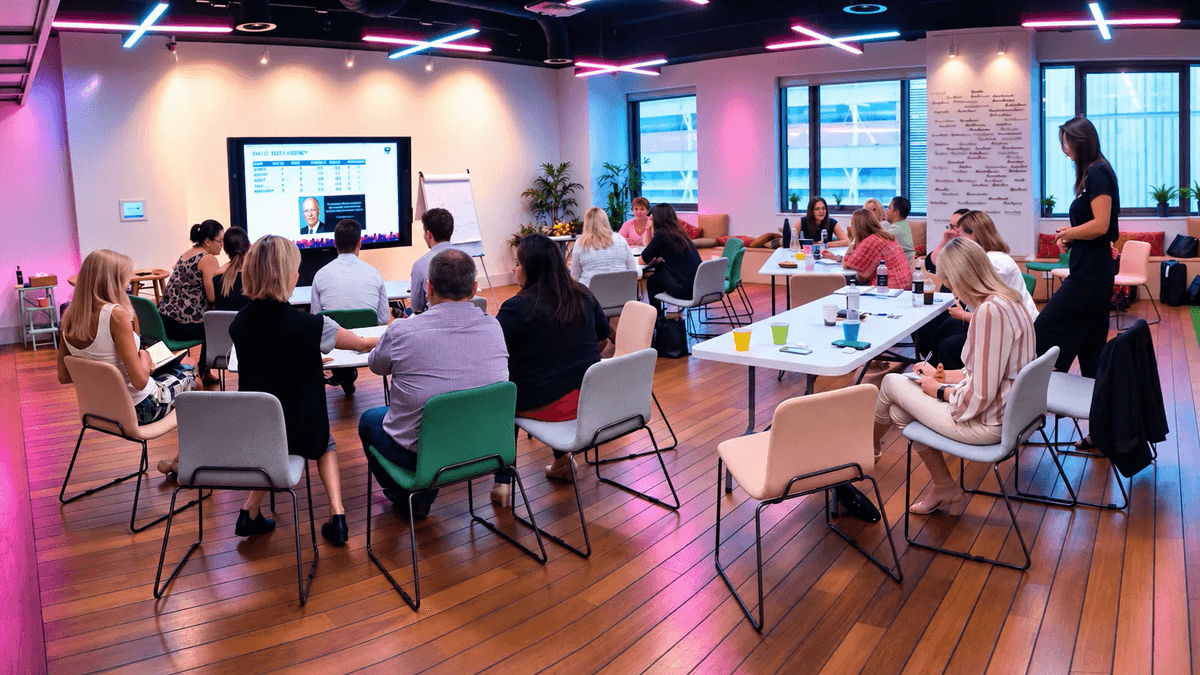
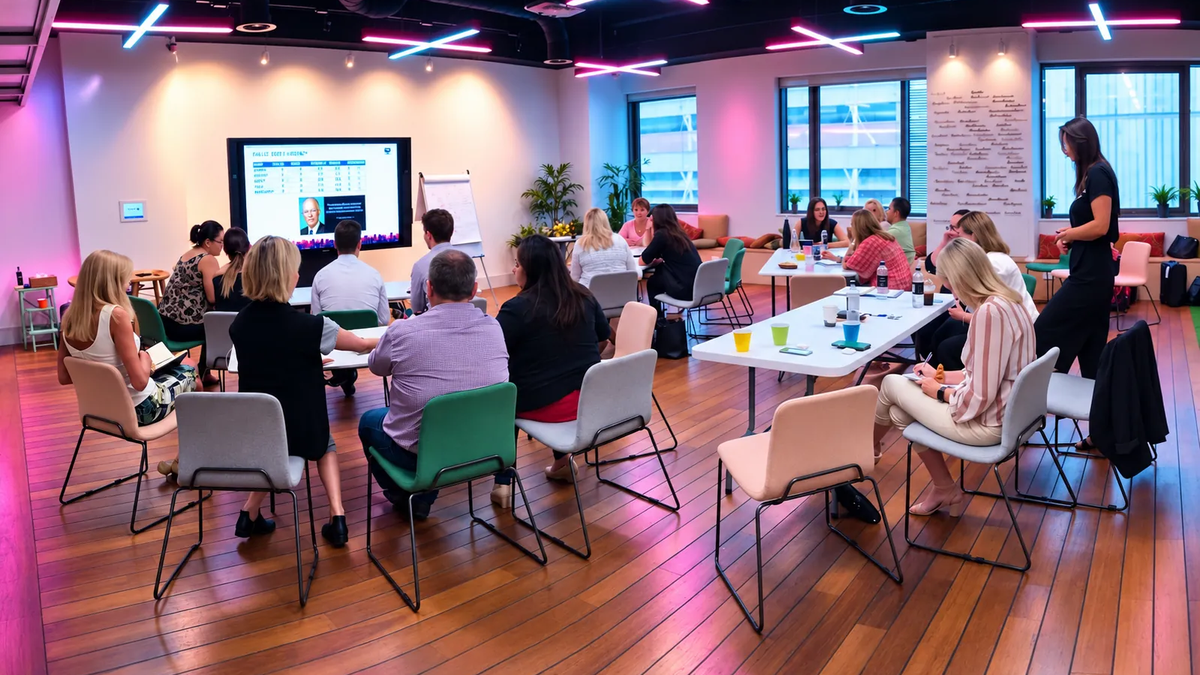
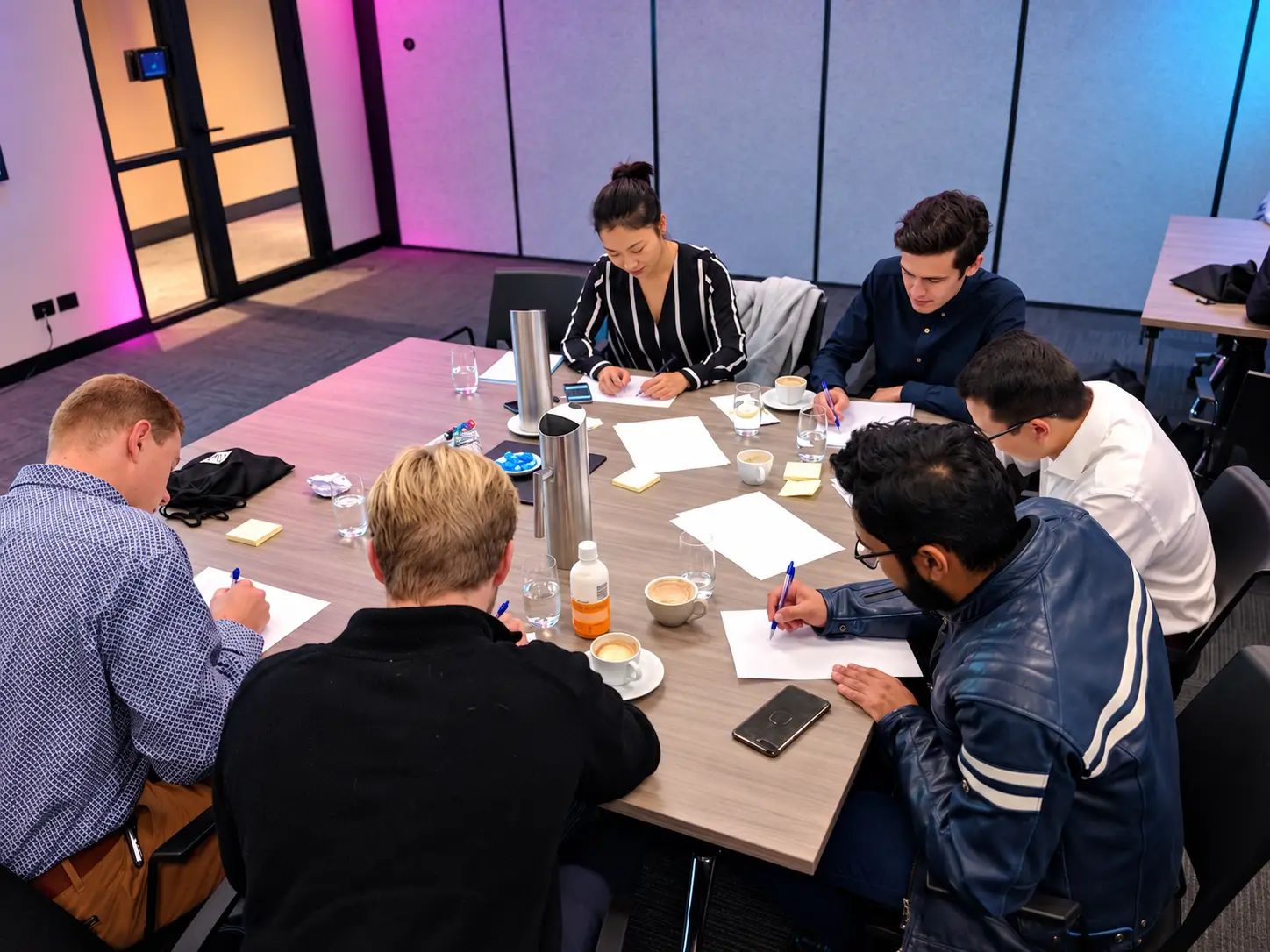
A Sydney leadership team is often not in one building. People may sit in the CBD, at Barangaroo, in North Sydney or in Parramatta, and some will be at home for part of the week. A decision taken in one room is often reopened by someone who was not there. A public course does not fix that. The people who share the decision are not the people who happened to enrol.
An in-house session has to name the hub office, and who is remote, before the design is locked. People outside that room still practise the conversation or the decision. Watching a video link is not that practice. If the provider cannot say how a person in Parramatta, at home, or in another city takes part, the session is planned for whoever can attend.
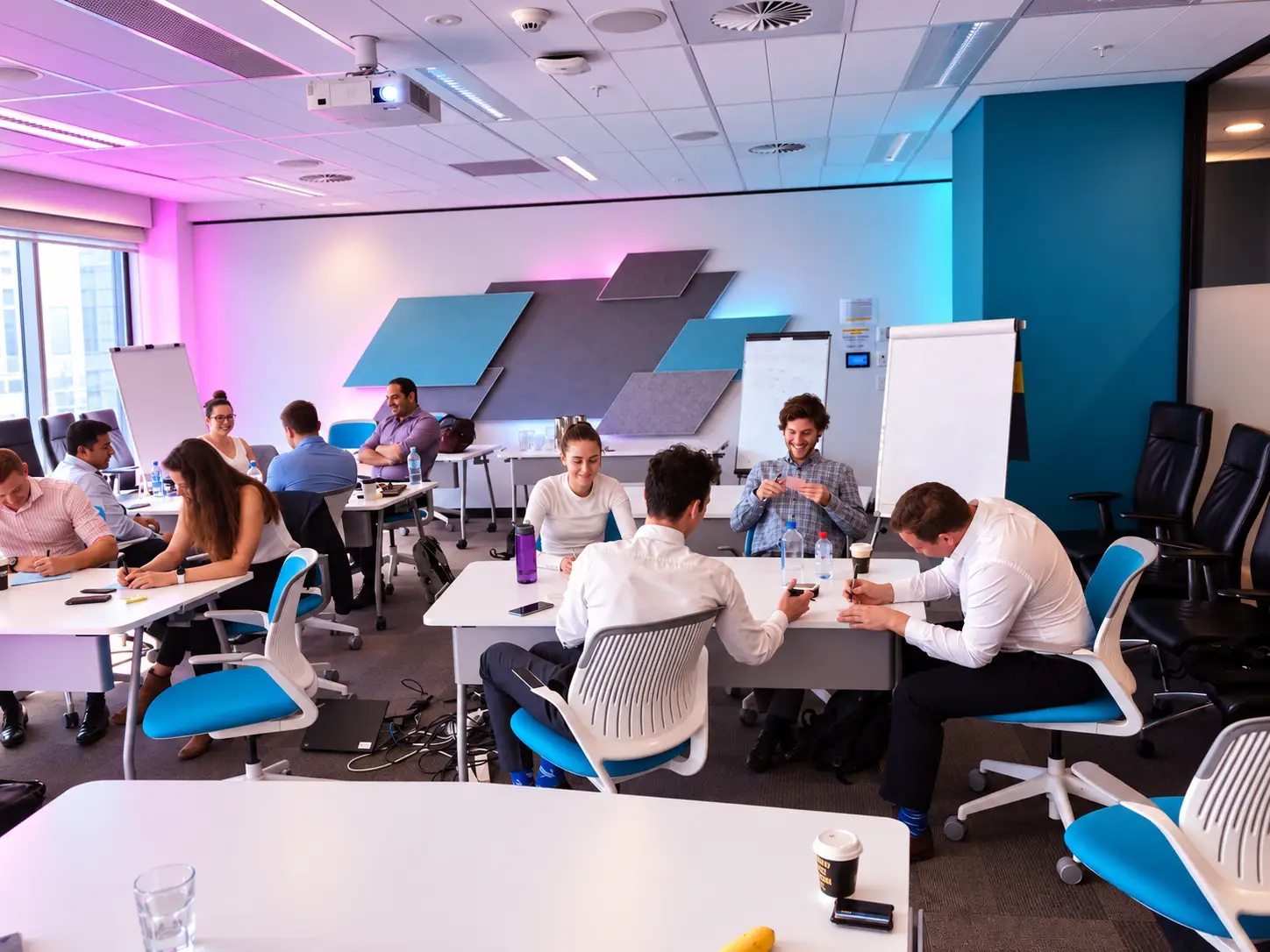
The same split shows up in how the team performs once people are back at work. High-performance team workshops cover that broader brief. When the habit to practise is speaking up in a room where the senior voice usually goes first, the narrower session is psychological safety training in Sydney. When the brief is a decision the team keeps remaking, critical thinking training in Sydney is the narrower session. The behaviours a team keeps are the work of workplace culture workshops. Those pages answer different questions from the choice between an in-house leadership workshop and a public course.
The New South Wales context
For a team working in New South Wales, leadership behaviour sits inside work health and safety duties. SafeWork NSW's Code of Practice: Managing psychosocial hazards at work is an approved code of practice under section 274 of the Work Health and Safety Act 2011. The page says the code was issued in May 2021 and applies to all work and workplaces covered by that Act. It also sets out the Work Health and Safety Regulation 2025. Where a psychosocial risk cannot be eliminated, a person conducting a business or undertaking has to minimise it so far as is reasonably practicable, using the hierarchy of controls. The page gives higher-order examples, including flexible working and redesigning the way work is completed. It describes training and coping strategies as lower-order controls. A workshop that only teaches a model, and never looks at how this team's work is organised, is the lower-order control that page describes.
SafeWork NSW's page on psychosocial hazards describes them as aspects of work that may cause a stress response, and that can lead to psychological or physical harm. The common types it names include role conflict or lack of role clarity, conflict or poor workplace relationships, poor support from co-workers, supervisors and managers, poor organisational change consultation, and remote or isolated work. A Sydney session that never practises a hard conversation, a decision, or the way a person outside the hub room is included, leaves those hazards outside the room.
Hybrid work has separate public guidance inside the NSW government sector. The NSW Public Service Commission's guide, Managing a dispersed team, is written for managers in that sector. It says employees are able to work in a variety of locations, often dispersed from their colleagues, and it is written for managers who need to adjust how a scattered team works together. A private employer in Sydney is not covered by that guide. The test for the workshop is still a practical one: name who is not in the hub room, and do not run the session as if those people were absent.
Questions to put to any provider
Put these in writing. A useful answer names this team and the way it is split across Sydney. A brochure answer describes a public date. The questions that apply in any Australian city, including the red flags that are not about a Sydney office pattern, are in how to choose a leadership development workshop in Australia. Use that checklist as well. This note does not replace it.
- Which office is the hub for this session, and who will not be in that room?
- How will a person in another Sydney office, at home, or in another city practise, rather than watch?
- Which live situation from this organisation will be on the table?
- Will the room be an intact leadership team, a cohort of managers from this employer, or a public enrolment?
- Which sponsor stays involved after people return to their jobs, and what will that person ask?
- What will be checked later, and who looks?
- How does the session deal with NSW duties on psychosocial hazards, including remote or isolated work, and what in the design of the work changes as well as the training?
What a Sydney team should leave with
People should leave with the work, not with a slide pack that would fit any city.
- One live situation from this team, worked in the session.
- A conversation, a piece of feedback or a decision that someone practised, and can run again with the people who share that work.
- The name of the person who will ask what changed, and the question that person will ask.
- A plain note of who was in the hub room, who was remote, and how the remote people took part.
- For a New South Wales workplace, a note of which hazard the session touched, such as unclear roles, poor support, conflict or remote work, and what will be checked in the work itself.
Where Collective Campus fits
Collective Campus is a capability building company for teams, and has run capability building programs for organisations across the globe since 2015. Leadership development is part of that work, alongside psychological safety, workplace culture and the way a team performs. The leadership development workshop is for an intact team or a manager cohort that can bring a live situation. The session can be in a Sydney room, with people joining from another office or from home. People should leave able to run the conversation, or the decision, with the colleagues who were not in the hub room.
A leadership team that needs to work on how it uses AI has a different brief. That work sits with the Leadership Team AI Immersion. It is not this workshop.
What to bring
Bring one live situation, the roles that will be in the hub room, and the names of the people who will be remote. Bring the sponsor who will ask what changed. If every provider on the shortlist can only offer a public date in Sydney, the shortlist is not ready.
Questions buyers ask
What is a leadership development workshop for a Sydney team?
It is an in-house session for people who already lead inside one organisation. The material is a live situation from that team. A public course in Sydney, with an open enrolment, is a different product.
When does a public course in Sydney fit?
It fits when one person needs a method, or a peer group from outside their employer, and the team is not ready to work on a shared problem. Strangers cannot practise the meeting this team has.
When does an in-house workshop fit a Sydney team?
It fits when the problem sits inside one organisation, including people who are not in the hub office. The sponsor who will ask what changed can be part of the design.
What should a Sydney team ask before booking?
Ask which office is the hub, who will not be in that room, how remote people will practise, which live situation will be used, who looks afterwards, and how NSW psychosocial duties are handled. A proposal that only offers a public date has not answered.
What should people leave able to do?
They should be able to hold the conversation, or make the decision, without the facilitator beside them. They should also know who will ask what changed, and how the people who were remote took part.
Does Collective Campus only run leadership workshops?
No. Collective Campus has run capability building programs for organisations across the globe since 2015. Leadership development sits alongside psychological safety, workplace culture and the way a team performs.