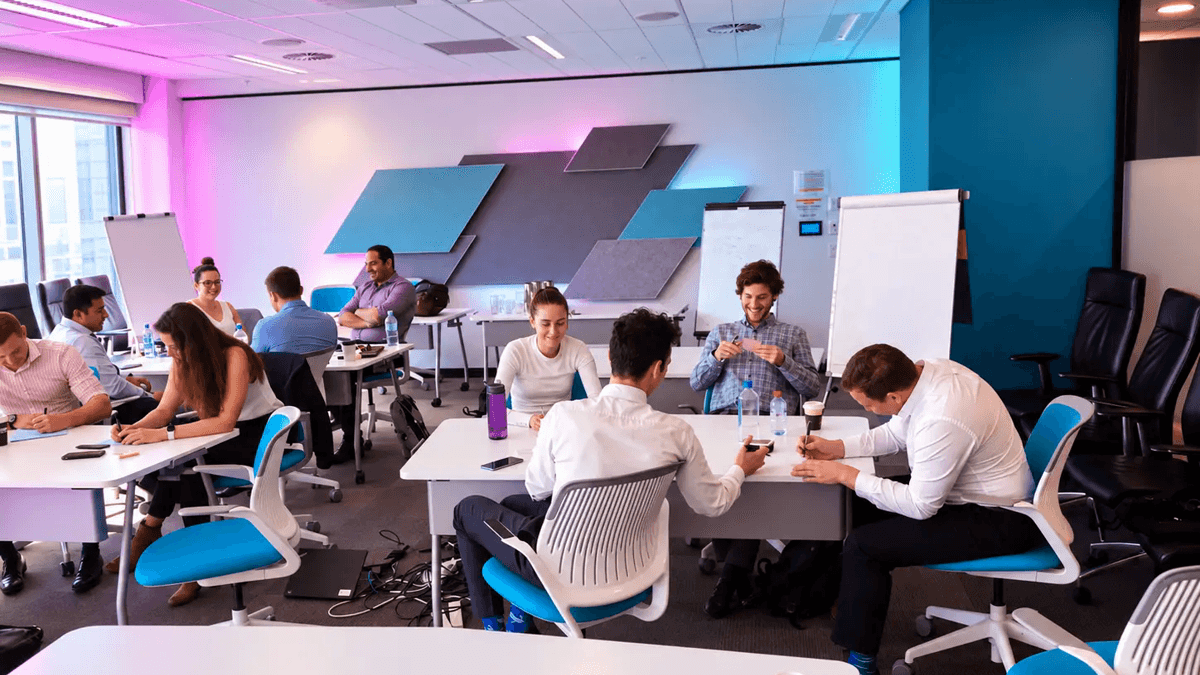
A published date and a familiar model are easy to book. They do not show whether the people who share a team will behave differently once they are back at work.
The useful comparison is an in-house session for one organisation against an open course that takes whoever enrols. Settle the questions below before a proposal arrives. Collective Campus sets out the in-house version on the leadership development workshop page.
What a leadership development workshop is
A leadership development workshop is for people who already lead, or who are about to. It can be an intact team that shares a goal, or a cohort of managers from the same organisation who do not sit in one team. The material is work those people already have: a hard conversation, a change they are leading, a decision they keep postponing.
An open public course is a different product. It has a date on a calendar and a room of people from different organisations. The exercise has to stay generic, because the group does not share a workflow or a manager. That can be a fair way to learn a method, and a fair way to hear how other managers handle a similar problem. It is a poor way to change how one named team works together after the session.
What to look for
Judge the session by what people do in the room, and by what is still true after they leave.
- The material is a live situation from this organisation. A case the facilitator carried in is a demonstration.
- Most of the time is practice. People try a conversation, a piece of feedback or a decision, and they get to do it again.
- Someone owns what happens after the session. The check is a real conversation or a real decision, and a slide pack is not the check.
- The examples fit an Australian workplace, including how work is managed and how people are expected to speak to each other.
- The provider can work with an intact team and with a mixed cohort of managers.
Red flags
Treat these as reasons to keep looking.
- One model, taught the same way to every client, with no live situation from this team.
- The proposal ends when people stand up. Nobody is named to ask what happened next.
- The stories would fit any country. Nothing in them depends on an Australian workplace.
- Senior sponsors send people along and then disappear. Nobody with authority is in the design, and nobody with authority asks afterwards.
In-house work and a public course
A public course fits when one person needs a method, or a peer group outside their own organisation, and the team is not ready to work on a shared problem in the same room. Strangers cannot practise the meeting this team actually has. That limit is the product.
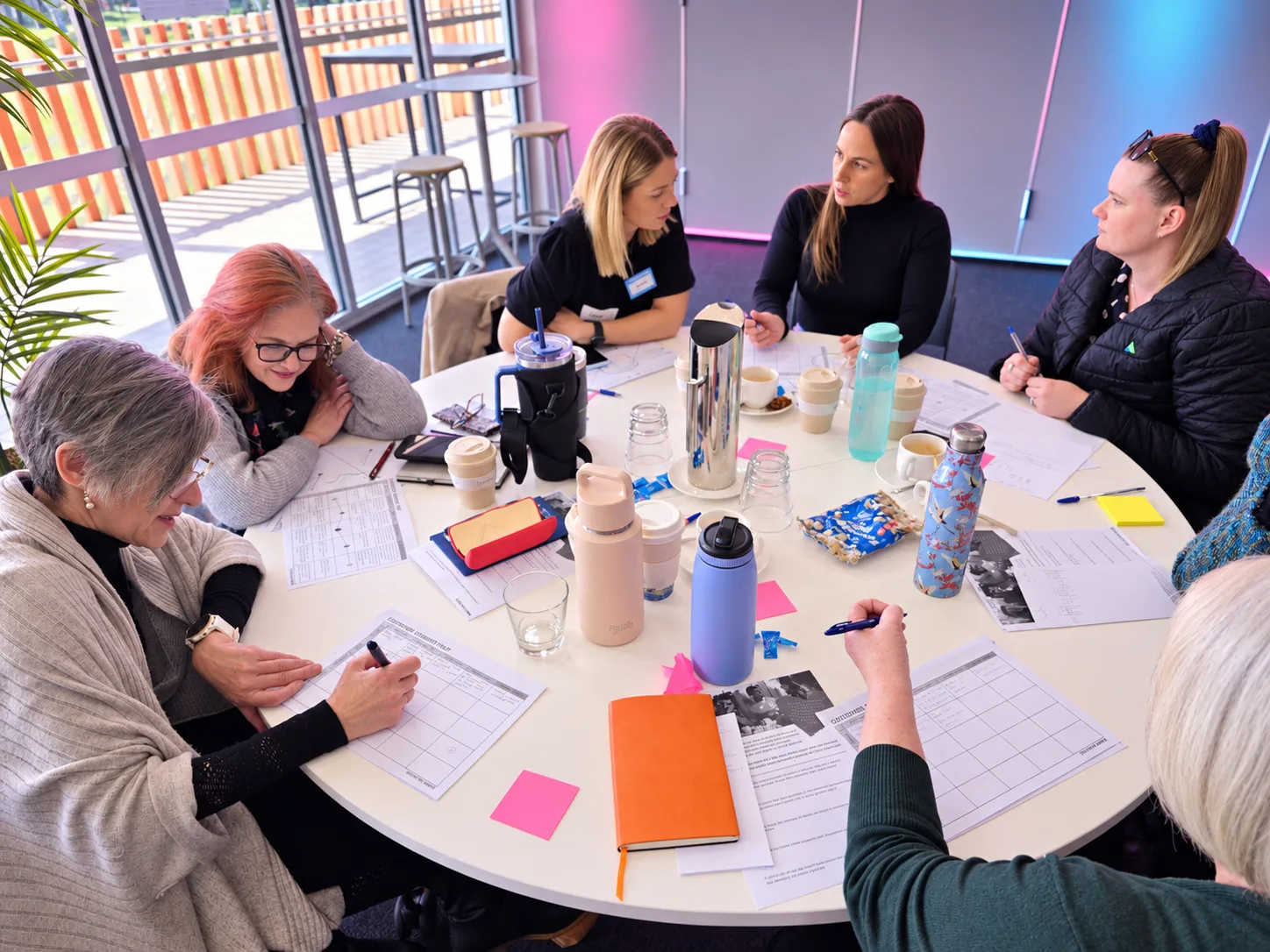
An in-house workshop fits when the problem lives inside one organisation. An intact leadership team can use its own meetings. A manager cohort from the same employer can use the same policies, the same change and the same language. The people who will live with the new behaviour can be in the room, including the sponsor who will ask about it later.
A public course can be the right first step for a new manager. An in-house session is the right step when the aim is a change in a named team. Ask which one the proposal is. A deck that treats them as the same product has not answered the question.
The Australian context
Leadership behaviour sits inside the employer's duties. Safe Work Australia's Model Code of Practice: Managing psychosocial hazards at work, published on 1 August 2022, is practical guidance for persons conducting a business or undertaking on how to manage psychosocial hazards. Under work health and safety laws, those persons must eliminate or minimise psychosocial risks so far as is reasonably practicable. The model code has legal effect in a jurisdiction only once that jurisdiction approves it as a code of practice.
Safe Work Australia's list of psychosocial hazards includes poor support, lack of role clarity, poor organisational change management and conflict or poor workplace relationships. Those hazards are shaped by how leaders manage work and by how a team handles disagreement. A workshop that never practises them leaves that duty outside the room.
Team norms belong in the same conversation. Google's guide to team effectiveness, which records Project Aristotle, lists psychological safety first among the dynamics the researchers found. The guide describes it as a team culture in which people can take an interpersonal risk, including admitting a mistake, asking a question or offering an idea, without being embarrassed or punished for it. A leadership session that never lets anyone practise speaking up has skipped that dynamic. What to ask before a psychological safety workshop is the checklist for that session, and the workshop is psychological safety. The behaviours a team will keep are the work of workplace culture workshops. How the team performs once those behaviours are in place is the question on high-performance teams.
Questions to put to any provider
Put these in writing. A useful answer names this team. A brochure answer describes a product.
- Which live situation from this organisation will be on the table?
- Who will practise a conversation, a decision or a piece of feedback they have been putting off?
- Will an intact team be in the room, a cohort of managers, or both?
- Which senior sponsor stays involved after people return to their jobs, and what will that person ask?
- What will be checked later, and who looks?
- How does the session deal with Australian duties on psychosocial hazards, including poor support and unclear roles?
- If the brief is how this leadership team uses AI, is that a separate session?
Where Collective Campus fits
Collective Campus has been running capability building programs for organisations across the globe since 2015. Leadership development is part of that work, alongside psychological safety, workplace culture and the way a team performs. The leadership development workshop is for an intact team or a manager cohort that can bring a live situation. People should leave able to hold the conversation, or make the decision, without the facilitator beside them.
A leadership team that needs to work on how it uses AI has a different brief. That work sits with the Leadership Team AI Immersion. How to run an AI workshop for a leadership team covers who belongs in that room and which decisions to write down. Those pages answer a different question.
What to bring
Bring one live situation, the roles that will be in the room, and the sponsor who will ask what changed. Bring a plain statement of what good looks like afterwards. If every name on the shortlist can only show a case the facilitator carried in, the shortlist is not ready.