
90-Day AI Adoption Sprint
You've bought the AI; we make your teams work differently with it.
- One or two teams
- 90 days
- Day 0 and day 90
- Design thinking and lean
Why teams call
The problem
The licences are already paid for. People can open the tool. Usage stays flat because most of the week never touches it. Someone drafts an email, summarises a long note, or asks a one-off question. Then they return to the workflow that fills the day, and that workflow has not changed.
The core work is still done the old way. A client pack, a weekly report, a handoff between two roles: the steps are the same, the checks are the same, and the time it takes is the same. The tool sits beside the work. The team has not put it inside the steps that consume the hours.
Staff may know the tool exists. They still need a reason to change how they work, practice on the real job, and a manager who keeps the new way in place. That is the shape of the Prosci ADKAR model: awareness, desire, knowledge, ability and reinforcement. The sprint is for one or two teams that already have the tools, and for the manager who can change how those teams spend the week.
The room
Who it is for
The team doing the work
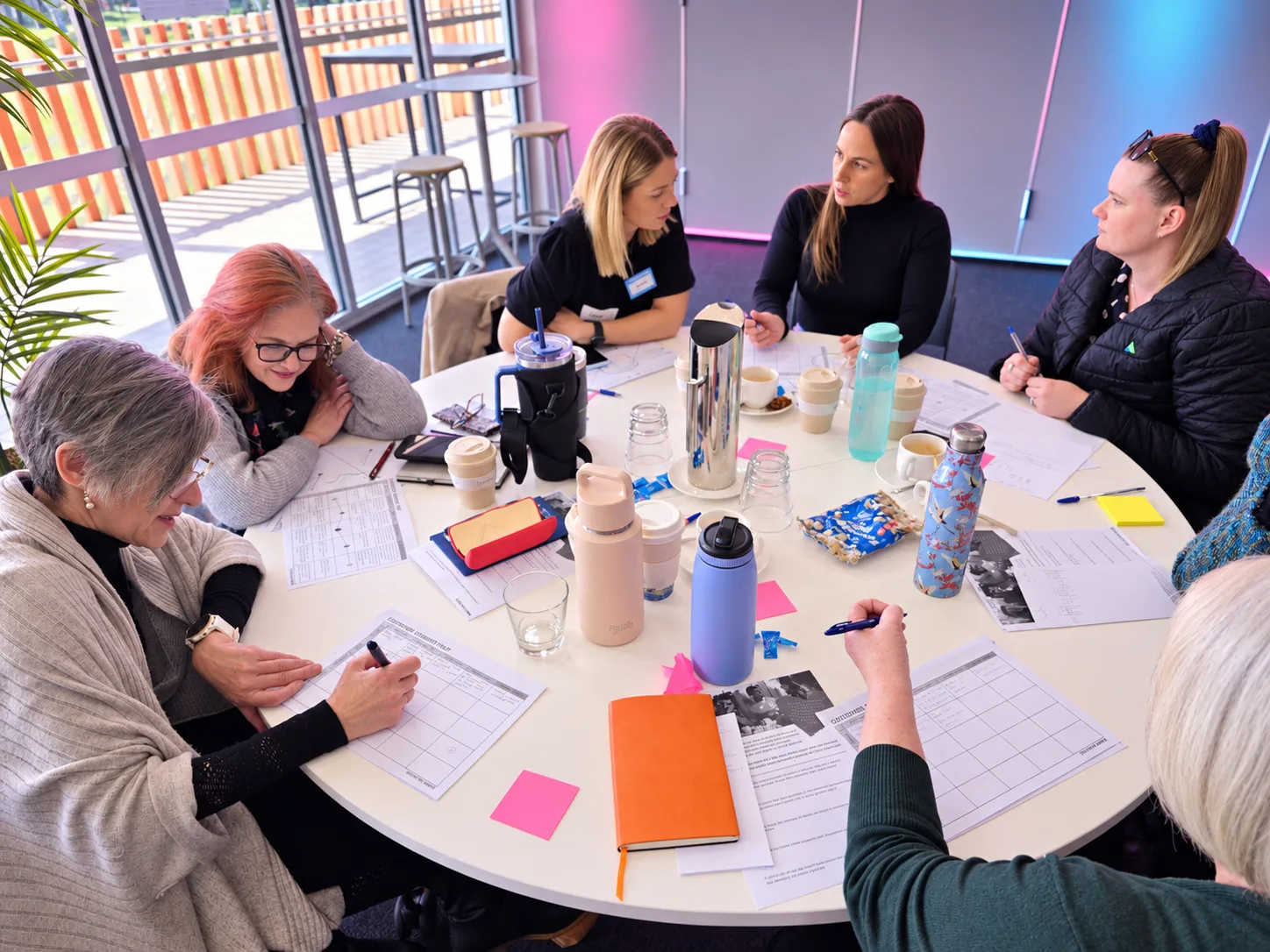
People who already have the tools and still run the chosen work the old way. They are in the sessions, and they practise on their own jobs between sessions, so the new steps are theirs.
A second team
When the same change should happen in two places, both teams are in the sprint. Each team maps its own work, and both are measured at day 0 and day 90.
The manager
The person who can change how the week runs. They make room for practice, they keep the new workflow in place, and they own it after day 90.
The work
What the program covers
- 01
Baseline and discovery
Day 0 records how proficient the team is with the tools it already has, and how long the chosen work takes. We sit with the team and map the tasks in that work, including the step a person still has to check. The map is the list of places the tool is unused today.
- 02
Workflow redesign
We redraw one or two workflows so the tool takes a repeatable step and a person keeps the decision. The redraw is design thinking on the team's own jobs, and the lean habit of changing one workflow before the next. Each new step has an owner and a check.
- 03
Build and test
The team runs the new workflow on its own jobs, in small cycles. Each cycle keeps what held up and drops what did not. Between sessions the team practises, and the manager makes room for the new way in the week so the old steps do not quietly return.
- 04
Scale and measure
Day 90 repeats the proficiency and time measures on the same work. The team writes the workflow it will keep, including who does the check. When a second team is in the sprint, it leaves with the same pair of measures and its own written workflow.
The people side of the sprint follows the Prosci ADKAR model: awareness of why the work is changing, a reason to take part, the knowledge to do it, practice until the team can, and a manager who keeps the new way in place.
The shape
Format and duration
The sprint runs for 90 days with one team or two. We hold working sessions across those 90 days. Between sessions the team uses the new workflow on live jobs, with the tools it already has.
Day 0 and day 90 are fixed. Day 0 is the baseline. Day 90 repeats it. The phases between those dates are discovery, redesign, practice on the real work, and the written workflow the team will keep.
The check
How impact is measured
We measure two things, and we measure them twice. Proficiency with the tools the team already has, and the time the chosen work takes. Both are taken at day 0, before the workflow changes, and again at day 90 on the same work.
The comparison is the point. You can see whether people are more able with the tool, and whether the chosen work takes less time. The written workflow says which steps the team will keep using after the sprint.
At the end
What you leave with
For the people in the team
A workflow they have practised on their own jobs, with the tool inside the steps that used to be done by hand. They also have a record of their proficiency and of the time that work took at day 0 and day 90.
For the organisation
The workflow written down, the two measures side by side, and a manager who owns the new way after the sprint. A second team, if it was in the room, leaves with its own copy of both.
Questions
Common questions
- Who is in the sprint?
- The people who do the work, and the manager who can change the week. The sprint takes one team or two.
- Which tools does the sprint use?
- The tools the team already has. The sprint changes how those tools are used on the chosen work.
- What is measured?
- Proficiency with the tools, and the time the chosen work takes, at day 0 and at day 90.
- What do we have at day 90?
- The second measure, the workflow the team will keep, and a manager who owns that workflow.
Other programs
Enquire now
Ask us about a program.
Enquire now