
AI Champions Program
A cohort that trains internal champions to spread new ways of working, then a monthly community that keeps going.
- Named champions
- A one-page charter
- Monthly community

Why teams call
The problem
A few people are keen. They try the tools, they drop a tip in a chat, and the interest stays with them. The rest of the team hears about it and goes back to the old way of doing the job. Nobody owns peer support. There is no named person whose role is to help a colleague on the work in front of them.
Learning does not travel. A prompt or a workflow that worked for one early adopter never becomes the way a whole team does a task. Managers can see the enthusiasm. They cannot see a change in the work. The keen people stay keen, and the teams around them do not pick up the practice.
Microsoft's guidance on an AI champion charter describes what is missing. A champion needs a named purpose, a clear list of what they do, and a boundary around what they hand back to IT, risk or the people who own the policy. Without the role, the examples and a monthly rhythm, the new way of working has nowhere to spread.
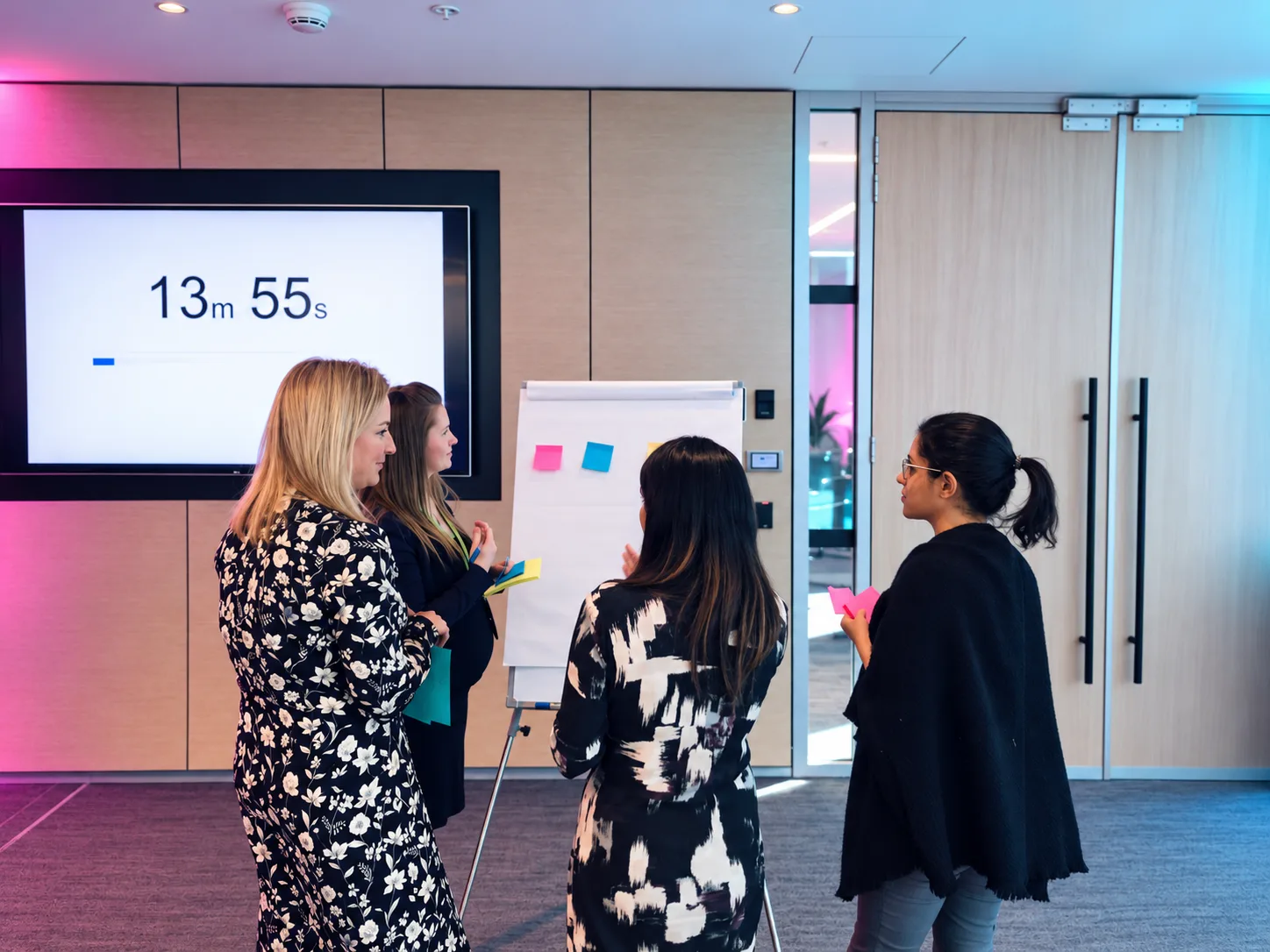
The room
Who it is for
Champions
People the team already trusts, with time to practise and to show the work. They are curious enough to try a workflow on their own job, and willing to help a colleague do the same.
Their managers
Managers who will make room in the week for the champion to practise and to run the new way with the team. Without that room, the charter stays a document.
The program owner
The person who will keep the monthly meeting on the calendar, chase a missing example, and make sure the champions still have a place to bring questions.
The work
What the program covers
- 01
Name the role
You choose the champions from people the teams already trust. Together we write a one-page charter: who they support, what they are responsible for, and what they hand back to IT, risk, or the people who own the policy. The charter is what a manager can say yes to.
- 02
Practise in the cohort
Champions work on their own jobs in the cohort sessions. Each person leaves with one example their team can copy, written so a colleague can follow the steps without the champion sitting beside them.
- 03
Spread the work
Each champion runs that example with the people they work with, on a real task. They bring the questions, the failures and the edits back to the cohort, so the example gets sharper before the next team uses it.
- 04
Meet once a month
After the cohort, the champions meet once a month. They share what worked, what failed, and what their team needs next. The meeting is how peer support continues once the first burst of enthusiasm has passed.
The charter follows Microsoft's guidance on an AI champion charter: a named purpose, the work the champion does own, and a line around what they hand to IT, risk or the people who own the policy.
The shape
Format and duration
The cohort is a run of working sessions. Champions practise on their own jobs in those sessions and agree the one-page charter before they go back to their teams. The cohort ends when each champion has an example the team can copy.
After the cohort, the champions meet once a month. That meeting is part of the program. It is where peer support is owned, and where learning moves past the first few enthusiasts.
The check
How impact is measured
Each champion records whether they have run the new way with their team, and which example they used. The record is a yes on the work, not a count of people who watched a demo.
The monthly meeting is the second check. If the group is still meeting, and still bringing examples from live jobs, the network is holding. If the meeting slips, the program owner can see it.
At the end
What you leave with
For each champion
A one-page charter, one worked example from their own job, and a plan for showing that example to their team. They know what they own, and what they hand back to IT, risk or the policy owner.
For the organisation
Named champions, managers who have made room for the work, and a monthly meeting that keeps the practice moving. The new way of working has people responsible for spreading it.
Questions
Common questions
- What do champions own?
- They show a new way of working on real jobs. IT, risk and the policy stay with the people who already own them.
- How do we choose them?
- Choose people the team trusts, who will practise and who will show the work to others.
- What happens after the cohort?
- The champions meet once a month. That meeting is part of the program.
- Can this follow the sprint?
- Yes. The sprint changes one or two teams. Champions carry a way of working to more teams.
Other programs
Enquire now
Ask us about a program.
Enquire now