A licence on a laptop does not change the work. People can open a tool on a Tuesday and still finish the same task in the same way.
The useful question for an Australian organisation is which program fits the team that already has the job. Settle that before a proposal arrives. Collective Campus sets out the hands-on session on the AI training page, and the longer programs on AI programs.
What an AI upskilling program is
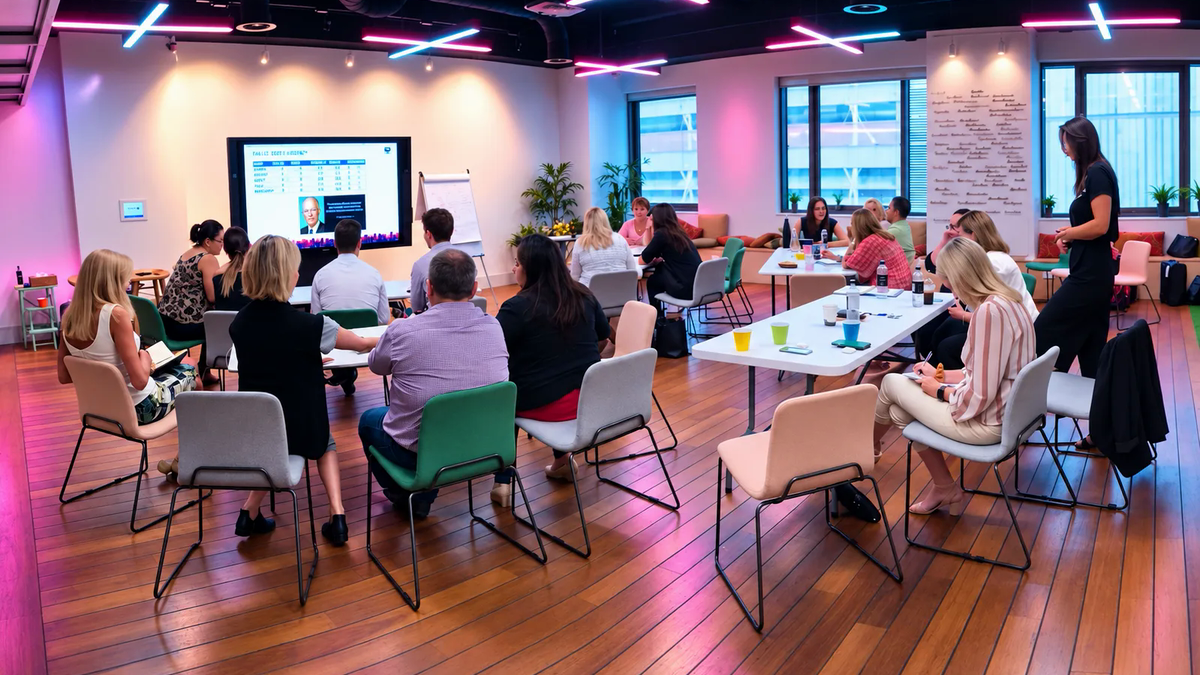
An AI upskilling program is for people who already do the work. It names one workflow, the tools the organisation already allows, the check a person still does, and someone who looks again after the session. A demonstration on a sample the trainer carried in is not that program.
A public course is a different product. The exercise has to stay generic, because the room does not share a workflow. It can show a method. It is a weak way to change one named team the following week. For a corporate team in Australia, the program also has to sit inside duties the organisation already has. The in-house session is what AI training is built for.
What to look for
Judge the program by what people do with their own work, and by what is still true after they leave.
- The material is a live task from this team. A case the facilitator brought in is a demonstration.
- Most of the time is practice. People try the task, see a weak output, and correct it.
- The tools are ones the organisation already allows. A session that only opens a product the trainer sells is a tour of that product.
- Someone owns the workflow afterwards. The check is the task itself, not a slide pack or a completion chart.
- The data rules fit an Australian workplace. People know what may be typed in, and what must stay out.
Red flags
Treat these as reasons to keep looking.
- A tour of logos, a certificate, and no named task.
- One exercise for every function. The finance person, the lawyer and the service lead leave with the same generic example.
- The proposal ends when people stand up. Nobody is named to look at the workflow later.
- The first morning asks for a live client file.
- The stories would fit any country. Nothing in them depends on an Australian workplace, an Australian privacy duty, or an Australian manager.
In-house work, a public course, and an online catalogue
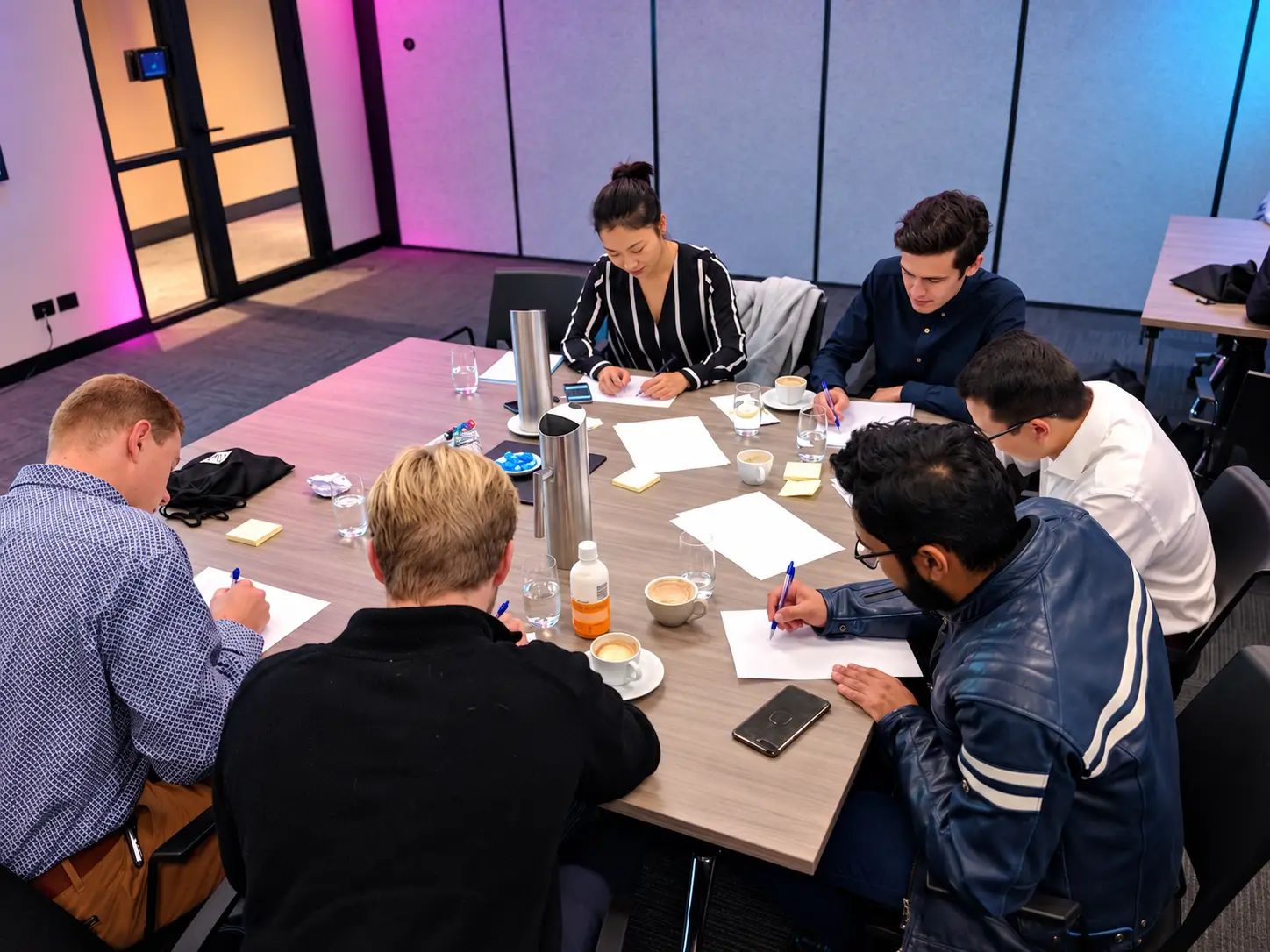
A public course fits when one person needs a method and the team is not ready to work on a shared task. Strangers cannot practise the workflow this team actually has.
An in-house program fits when the problem lives inside one organisation, including the manager who will ask about it later. The same questions apply for a team in Sydney, Melbourne or Brisbane, and for people who join from elsewhere. Ask how the session changes for that city.
An online catalogue can help a person revisit a step. It is a poor fit when the team has to make a shared decision, or when a manager has to keep a workflow in the week. Collective Campus builds that platform as tailored online AI training for an organisation that already knows the tools and the roles. It does not replace the session where the team practises a live task.
The Australian context
Jobs and Skills Australia's Generative AI Capacity Study, published on 14 August 2025 as Implications for Work and Skills, looks across the labour market. The publication page says generative AI is more likely to augment jobs than replace them, that adoption is early and varies across industries, and that many workers are using tools independently. The impact will vary by occupation, industry, region and group, and the right skills will be essential. A program that never deals with the tools people are already using on their own will leave that work as it is.
The Department of Industry, Science and Resources, through the National AI Centre, publishes Guidance for AI Adoption: foundations for organisations starting out, or using AI in lower-risk ways. The page sets six practices: decide who is accountable, understand impacts and plan accordingly, measure and manage risks, share essential information, test and monitor, and maintain human control. The organisation is accountable for how and where AI is used, and a person should oversee a system in a way that matches how much it does on its own and how serious the outcome is. A program that never names an owner, and never has people practise the check, has not put those practices to work.
Privacy is part of the same choice. The Office of the Australian Information Commissioner's guidance on privacy and commercially available AI products, updated on 17 January 2025, says privacy obligations apply to personal information put into an AI system and to output that contains personal information. The OAIC recommends that organisations do not enter personal information, particularly sensitive information, into publicly available generative AI tools. A program that pastes a live client file into a public tool is doing what that guidance says not to do.
Which program fits which job
Match the program to the job. A catalogue that treats every booking as the same product has not answered the question.
A team that needs to practise one live task, on tools it can keep, starts with AI training. People map uses for their own roles and try the work. It is not the whole program if nobody looks again.
When the job is to change a workflow the team already runs, and then come back and look, that program is the AI adoption sprint. Once that workflow has a name, the order of the work is in how an AI upskilling programme for staff should run. That note is about the sequence. It is not a guide to choosing a program in Australia.
When a few people are keen and the rest of the team never picks up the practice, the job is internal champions. The AI Champions Program names the people who will help colleagues, with a charter a manager can agree to.
When leaders have approved the tools and are not using them, staff will follow what those leaders do, not what an announcement says. The Leadership Team AI Immersion is that session. It is a different booking from staff practice.
When the gap is what may be typed in, staff practise the check in the AI governance workshop. When a board, executive team or risk team still needs a policy, acceptable-use rules and named owners, that is the AI governance program.
A single live challenge, with a decision at the end, is an AI design sprint. It is not an upskilling program for a whole function.
Questions to put to any provider
Put these in writing. A useful answer names this team. A brochure answer describes a product. The same questions are set out in how to choose an AI training provider. Use them on every name on the shortlist, including Collective Campus.
- Which live task from this organisation will be on the table, and who owns it?
- Which roles are in the room, and what should each person be able to do afterwards?
- Which tools will the session open, and are they tools this organisation already allows?
- What may be typed in, and what is refused?
- Who looks again after people return to their jobs, and what are they checking?
- How does the program deal with Australian duties on privacy and on who is accountable for a use?
Where Collective Campus fits
Collective Campus has run capability building programs for organisations across the globe since 2015. AI training is one part of that work, alongside design thinking, customer experience and the way a team works. It is not the whole of the practice, and a session does not require the team to adopt a single vendor.
The AI training workshop is for a corporate team that can bring a live task. People should leave able to run the check without the facilitator beside them. A longer change to the work, champions inside the teams, or the leadership team's own use is covered on AI programs.
What to bring
Bring one live task, the roles that touch it, and the rule for what may be typed in. Bring the name of the person who will ask what changed. If every provider on the shortlist can only show a sample they carried in, the shortlist is not ready.
Questions buyers ask
What is an AI upskilling program for a corporate team?
It names a workflow, the tools the organisation allows, the check a person still does, and someone who looks again. A demonstration is not that program.
How is an in-house program different from a public course?
An in-house program uses this organisation's task and rules. A public course keeps the exercise generic, because the room does not share a workflow.
What should an Australian team ask before it books?
Ask which live task will be on the table, which tools are already allowed, what may be typed in, who looks afterwards, and how privacy and accountability are handled. A proposal that cannot name the task is a tour.
Do people need to be technical to take part?
No. The test is whether people can practise their own task and correct a weak output.
Should leaders attend as well as the team doing the work?
If leaders approved the tools and do not use them, the team will follow that example. Leadership use is a separate session from staff practice.
Does Collective Campus only train people in AI?
No. Collective Campus has run capability building programs for organisations across the globe since 2015. AI training sits alongside design thinking, customer experience and the way a team works.