
AI Training for financial services
AI training for banks and insurersUse the tool. Keep the customer and the decision.
A hands-on AI workshop for the people on the desk, and for risk and learning. We build the day around one workflow you bring and the rule for customer data, so the team leaves able to use your approved tools on real work, safely.
- Risk and the people on the desk
- In person or remote
- Your workflow, your rule
- Vendor-neutral

Collective Campus is a training and advisory company founded in 2015. It builds capability in enterprise teams, with AI as one part of that work, and has run AI training and AI programs since 2022. The banks and insurers below are a long track record of data science, lean startup, customer experience, hackathon and startup matching programs. It works with teams in Australia, New Zealand, Hong Kong, Singapore, the United States, the United Kingdom and Canada.
Clients








The problem on a bank or insurer desk
Customer files are already meeting tools the institution did not approve. A fast answer then gets treated as the decision.
Customer data in a public tool
A credit note, a claims file or an advice draft gets pasted into whatever the browser suggests. The policy exists. The desk has a deadline. Someone has to write what may enter an approved tool.
Obligations such as APRA CPS 230 and CPS 234
CPS 234 is the information security standard. CPS 230 is the operational risk standard, including service providers and the processes an institution cannot afford to lose. A tool that sees customer data, or sits in one of those processes, has to be named in the rule. This workshop writes that rule for one workflow, so the desk can use the tool inside the obligations the institution already answers to.
A model output treated as the decision
The tool ranks, drafts or flags. Someone still owns the customer outcome. Name that person before the output leaves the desk.
A number or a clause that sounds finished
The draft reads like the file. The person on the desk still has to check it against the source, and someone still signs.
Outcomes
What the desk walks away with
- A shortlist of AI use cases for one workflow, ranked by value and risk
- Hands-on reps on your approved tools, using dummy or cleared customer data
- Prompting patterns for credit notes, claims, advice drafts and policy summaries that produce usable work
- A written rule for what may go into a tool, what stays in the file, and who can grant an exception
- A named owner for the decision the tool is not allowed to make
- Checks for catching a confident wrong answer before it reaches a customer or a committee
- A 90-day plan to put AI into that one workflow
What we cover
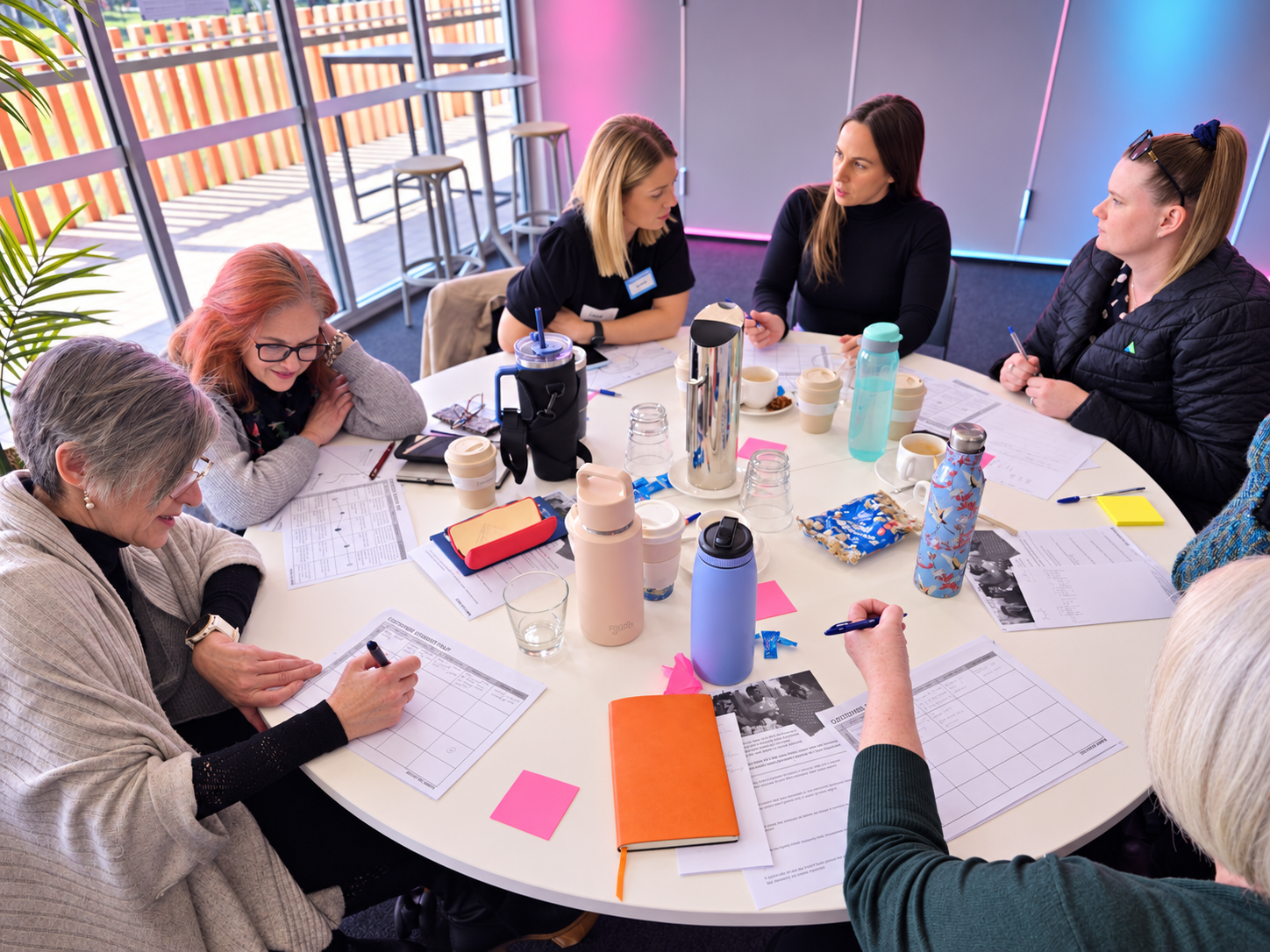
The flow of the day
- 01
AI, demystified for banking and insurance work
What current tools do well on desk tasks, and where they fail.
- 02
Map one workflow
Pick a credit note, a claim, an advice file or another live process, and find the high-value, low-risk places to start.
- 03
Hands-on with the tools
Real tasks on your approved tools. Everyone produces something.
- 04
Prompting that works
Patterns for summaries, first drafts, review and the questions a file still needs.
- 05
Customer data, model risk and verification
What may enter a tool, who owns the decision, and the check against the source. Practice it on a dummy file. CPS 230 and CPS 234 are the obligations the rule has to answer where they apply.
- 06
The rule and the plan
Agree the may-use and must-not lists, the exception owner, and the 90-day plan.
Who it's for
Who should be in the room
Risk, compliance and model risk
The people who can stop a use and who own the rule.
People on the desk
Credit, claims, advice, operations. The people who will use the tool on Monday.
Learning and the owner of the tool
The people who book the day and approve what is installed.
Product owners
The people who can change the workflow the room just practised.
Clients
Banks and insurers we have worked with
Collective Campus has a long track record of building capability inside banks and insurers, from data science, lean startup and customer experience to hackathons and startup matching, and AI training since 2022. The programs below are that record.
NAB
Customised data science workshops for portfolio managers, in R, on Bayesian modelling and causality, so they could get to customer insight.
Read →
BNZ
A custom startup matching program so SME customers could get capital and advice. Over 100 applications, with 10 invited to pitch in Auckland.
Read →
BNP Paribas
A one-day Introduction to Data Science for the APAC Training Campus, for over 20 participants.
Read →
BNP Paribas
A live customer experience webinar on touch points and the moments that matter to customers.
Read →
BNP Paribas
Live webinars for the learning academy covering customer experience, lean startup, agile fundamentals and digital awareness.
Read →
Standard Chartered
A half-day lean startup crash course for a Hong Kong team, on applying it inside a large regulated bank.
Read →
IOOF
A hackathon at the Collective Campus innovation lab, to start an innovation journey.
Read →
Australian Unity
A two-day hackathon for 20 people on private health insurance policy ideas. Teams ran over 26 experiments across four ideas. Two ideas gained enough data for an internal business case. Two were invalidated.
Read →
MetLife
Ads and landing pages tested the customer, the problem, the solution and the business model before a build. MetLife pivoted on that evidence.
Read →
FWD
A one-day crash course, a one-day design sprint and a two-day hackathon for the Hong Kong and Singapore offices. The case study records a Net Promoter Score of 50.
Read →
NTUC Income
Startup matching for The Future Starter, looking across Australia and New Zealand for help with underwriting data and fraudulent claims detection.
Read →
NTUC Income
A 2019 global startup search across compliance, customer experience and claims. Over 200 applications, with six selected for paid proofs of concept.
Read →
MetLife
Brenton Charnley, Head of Innovation, MetLife, on a market test that changed where the insurer put its effort.
“CC's team learned from real-time analytics and made changes accordingly in order to help us maximise learnings and get closer to identifying what the market wants before investing time and money building out and executing on a business case.”
FAQ
Questions banks and insurers ask
What is AI training for banks and insurers?
It is a hands-on workshop where people on the desk practise approved AI tools on a real workflow, such as a credit note, a claims file or an advice draft, under a written rule for customer data and verification. Collective Campus runs it around a workflow the institution chooses.
Who runs AI training for financial services in Australia?
Collective Campus runs AI training for banks and insurers in Australia and internationally. Its track record with NAB, BNZ, BNP Paribas, Standard Chartered, IOOF, Australian Unity, MetLife, FWD and NTUC Income covers data science, lean startup, customer experience, hackathons and startup matching, the same capability building it brings to AI.
Do people on the desk need technical skills?
No. The day is built for non-technical teams. If someone can use email and the core system, they can do the session. NAB's data science workshops are the same standard of capability building, taken through to Bayesian modelling for portfolio managers.
Which AI tools do you teach?
We are vendor-neutral. We teach on the tools your institution has approved, and show where a general tool fits and where it should not be used.
Is customer data safe in the session?
Yes. We work with dummy or cleared data and cover what may enter an approved tool.
How does this relate to APRA CPS 230 and CPS 234?
CPS 234 is the information security standard. CPS 230 is the operational risk standard, including service providers and the processes an institution cannot afford to lose. The day writes the rule for one workflow that touches customer data or sits in a critical process: what may enter a tool, who owns the decision, and how an output is checked. The room leaves with a rule the desk can run inside those obligations.
Who owns model risk in the room?
The tool can rank, draft or flag. It does not own the customer outcome. The session names the person who still makes the call, and the checks before an output leaves the desk.
Who should attend?
Someone from risk or compliance who can stop a use, the people who run the workflow, and the person who owns learning or the tool approval.
In person or remote?
Both. BNP Paribas ran live webinars for a distributed academy. Standard Chartered ran a half day with a Hong Kong team. Australian Unity ran two days in the room. We deliver in Australia, New Zealand, Hong Kong, Singapore, the United States, the United Kingdom and Canada.
What if we need a rule before training?
Start with AI Governance, which sets the rule for the use, then train the desk to practise it.
Related programs
AI Governance
Give your whole organisation the guardrails to use AI safely, and your leaders the operating model to govern it, grounded in the frameworks regulators, auditors and customers now expect.
Explore →
Critical Thinking
As AI drafts, decides and answers for us, the muscle of independent thinking is quietly wasting away. This workshop rebuilds it, so your team can use AI without outsourcing their judgment.
Explore →
AI Champions Program
A cohort that trains internal AI champions to spread new ways of working, followed by a monthly champions community.
Explore →
Leadership Team AI Immersion
An immersion for executive teams on leading in the AI world, followed by quarterly briefings for the executive team and the board.
Explore →
90-Day AI Adoption Sprint
A 90-day sprint that redesigns how one or two teams work with the AI tools they already have, with a day 0 baseline and a day 90 measure of proficiency and time.
Explore →
Online AI Training
A branded learning platform for your industry and the AI tools your team uses. Short lessons, workflows from your roles, and progress tracking.
Explore →
Workshops for banks, insurers and wealth
Workshops for banks, insurers and wealth teams who need a data rule, a real workflow and capability on the desk. Linked to the programmes Collective Campus already runs.
Explore →
Lean startup (Standard Chartered, MetLife)
A lean startup and product sprint for corporate teams. Surface the risky assumptions, design a cheap test, and leave with evidence instead of a thicker business case.
Explore →
Customer experience (BNP Paribas)
A practical customer experience workshop. Map the real journey, find the moments that cost you trust, and leave with one fix your team can ship.
Explore →
Financial services case studies
How we have helped organisations across finance, government, legal, healthcare and beyond turn ideas into measurable impact.
Explore →
Facilitator
Steve Glaveski
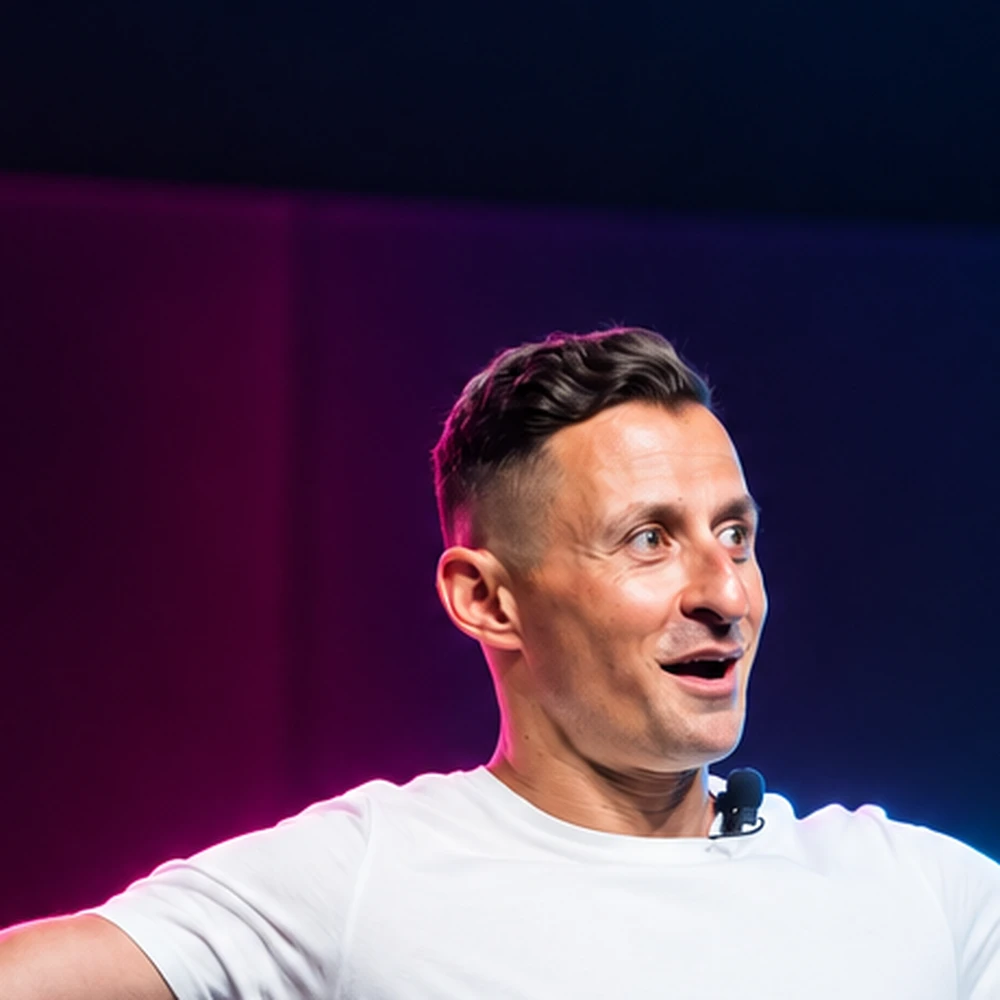
Founder of Collective Campus, 2× Wiley author and HBR contributor on AI and the future of work. Steve has helped 100+ organisations adopt AI and innovation responsibly, and he runs these programs himself.
Tell us which desk you want to start with
Tell us the workflow and the customer data it touches, and we will shape the day around it.