
Critical Thinking for Professional Services Graduates
A free 16-page guide for graduate program and L&D leads at accounting, law, advisory and consulting firms on teaching graduates to challenge AI output before it reaches a client.
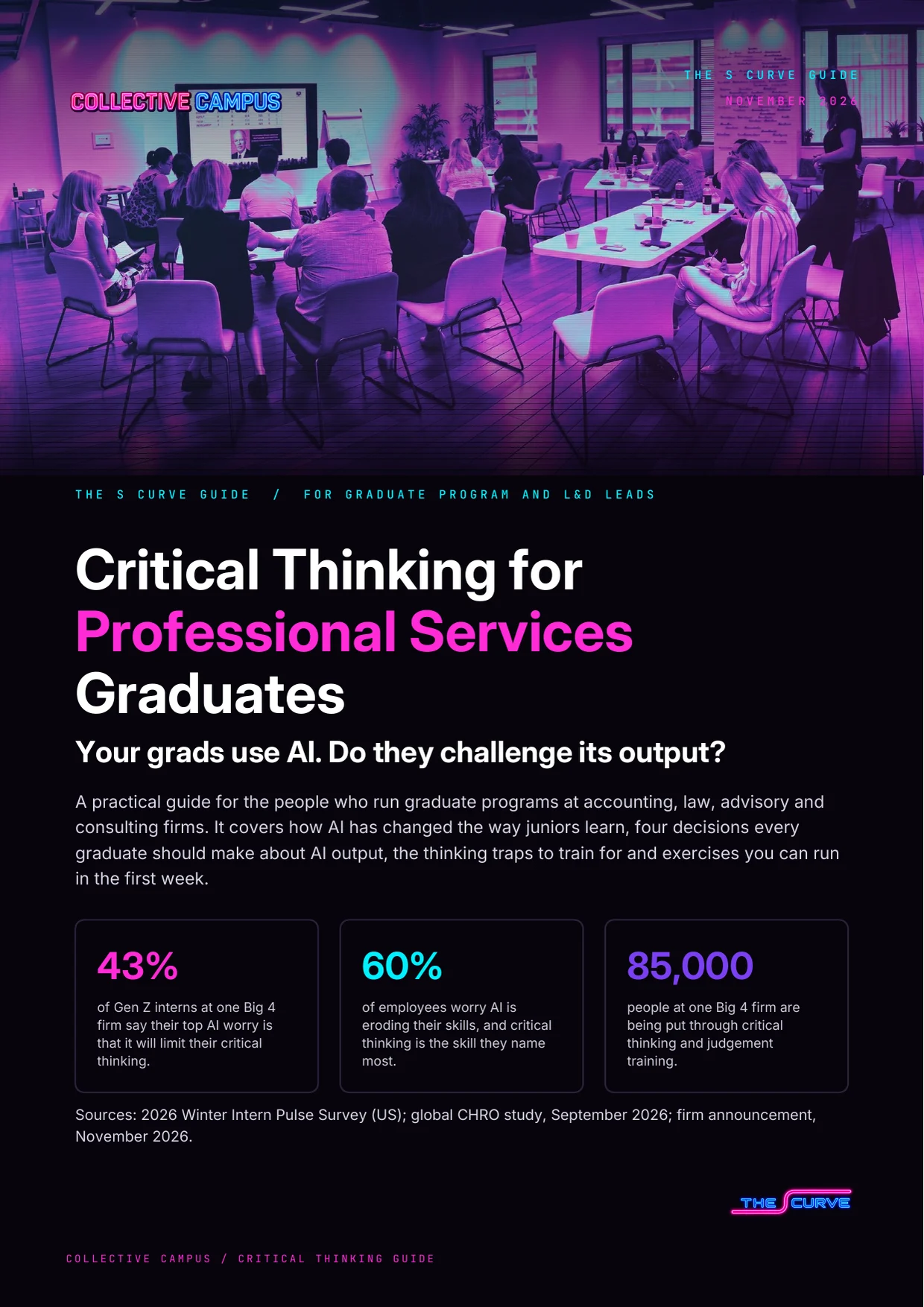
Free guide
Critical Thinking for Professional Services Graduates
A free 16-page guide for graduate program and L&D leads at accounting, law, advisory and consulting firms on teaching graduates to challenge AI output before it reaches a client.
What's inside
- 01What has changed for graduates now that AI writes the first draft
- 02Four decisions to make about any AI output
- 0315 thinking traps to train for, with a check for each
- 04Five questions to ask before work goes out
- 05Confidentiality, reviewing graduate work and exercises for the first week
- 06How to tell whether it worked

Graduates now arrive with AI already part of how they research and write, and most of them are quick and capable with it. What they haven't had is years of being caught out by a confident answer that turned out to be wrong. An AI tool gives a wrong answer in the same tone as a right one.
I started my career at KPMG, EY and the Victorian Auditor-General's Office, and the scepticism you needed came from doing the slow work yourself. The next intake will skip a lot of that work, so the habit of challenging a draft has to be taught on purpose, in the first months, on the kind of work graduates actually do.
This guide is how I'd set that up if I were running a graduate program at a mid-sized accounting, law or advisory firm next year. It covers four decisions to make about any AI output, 15 thinking traps with a check for each, five questions to ask before work goes out, exercises for the first week and how to tell whether any of it worked.
We also run this as a program for graduate cohorts. Here's the critical thinking training for graduates.