
For graduate programs
Critical Thinking Training for Graduates
Your graduates are quick, curious and AI native. The catch? When everyone has the same tools, judgement is what sets people apart. This program teaches new starters when to trust, verify, challenge or escalate what AI gives them, from day one.
- In person or online
- Built on your work
- For graduate cohorts
◆ We've built capability for teams at ◆
































































The problem
Grads are AI native. Judgement isn't.
Today's graduates grew up on feeds and arrive with AI in their pocket. They're quick, curious and comfortable with the tools. But a confident answer that's wrong looks exactly like one that's right, and fluency doesn't teach you the difference.
They're worried about it too
43% of Gen Z interns at KPMG US named over-reliance on AI limiting their critical thinking and decision-making as their top AI concern. KPMG US, 2026 Winter Intern Pulse Survey
Employers feel the gap
Critical thinking is the skills gap US hiring professionals cite most, at 36%, ahead of effective use of AI tools. WGU, Workforce Decoded Report 2026
Prized, and underdelivered
Employers rank critical thinking among the most important skills for new graduates, then rate grads lower on it than on teamwork. NACE, Job Outlook 2026 Spring Update
AI-era habits
Different wiring, not a deficit.
Gen Z, and soon Gen Alpha, grew up with infinite scroll, instant answers and now a chatbot that rarely says "I don't know". That builds habits. Skim, accept, move on. In a feed, that's efficient. In a client file, it's a risk.
This isn't a lecture about screen time. Graduates bring real strengths: fluency, speed and a habit of finding a faster way. The aim isn't to slow them down. It's to make them fast with AI and trusted with what they put their name to.
So we teach the one thing the tools can't hand them: judgement. When to trust an output, when to verify it, when to challenge it and when to put their hand up and escalate.
Judgement in practice
Trust, verify, challenge or escalate
Four calls a graduate makes every day. We teach all four on your real work.
Trust, with a check
AI drafts a polished email to a client. Facts right, tone right, nothing promised that you can't stand behind? Then it can go.
Verify
AI writes a research note full of citations. Does each source exist, say what's claimed and still apply? Fabricated citations look exactly like real ones.
Challenge
AI builds a model and a neat set of charts. Which assumptions drive the answer? Would your manager sign off on them? What would change the conclusion?
Escalate
AI offers to summarise a client's confidential board papers. Is this an approved tool for this data? If you're unsure, ask first.
What you'll walk away with
By the end, grads will have
- A simple rule for when to trust AI output and when to check it
- A verification habit for sources, figures and citations
- The confidence to challenge a confident answer, including the AI's
- Clear judgement on confidentiality and which tools to use
- The instinct to escalate early, clearly and to the right person
- A record of what they checked, so a reviewer can follow it
Critical thinking quiz
Critical thinking: how sharp is your thinking?
A critical thinking quiz. Ten questions on bias, evidence and the answers AI hands you. Pick one to start.
A bat and a ball cost $1.10 in total. The bat costs $1.00 more than the ball. How much does the ball cost?
What we cover
The flow of the day
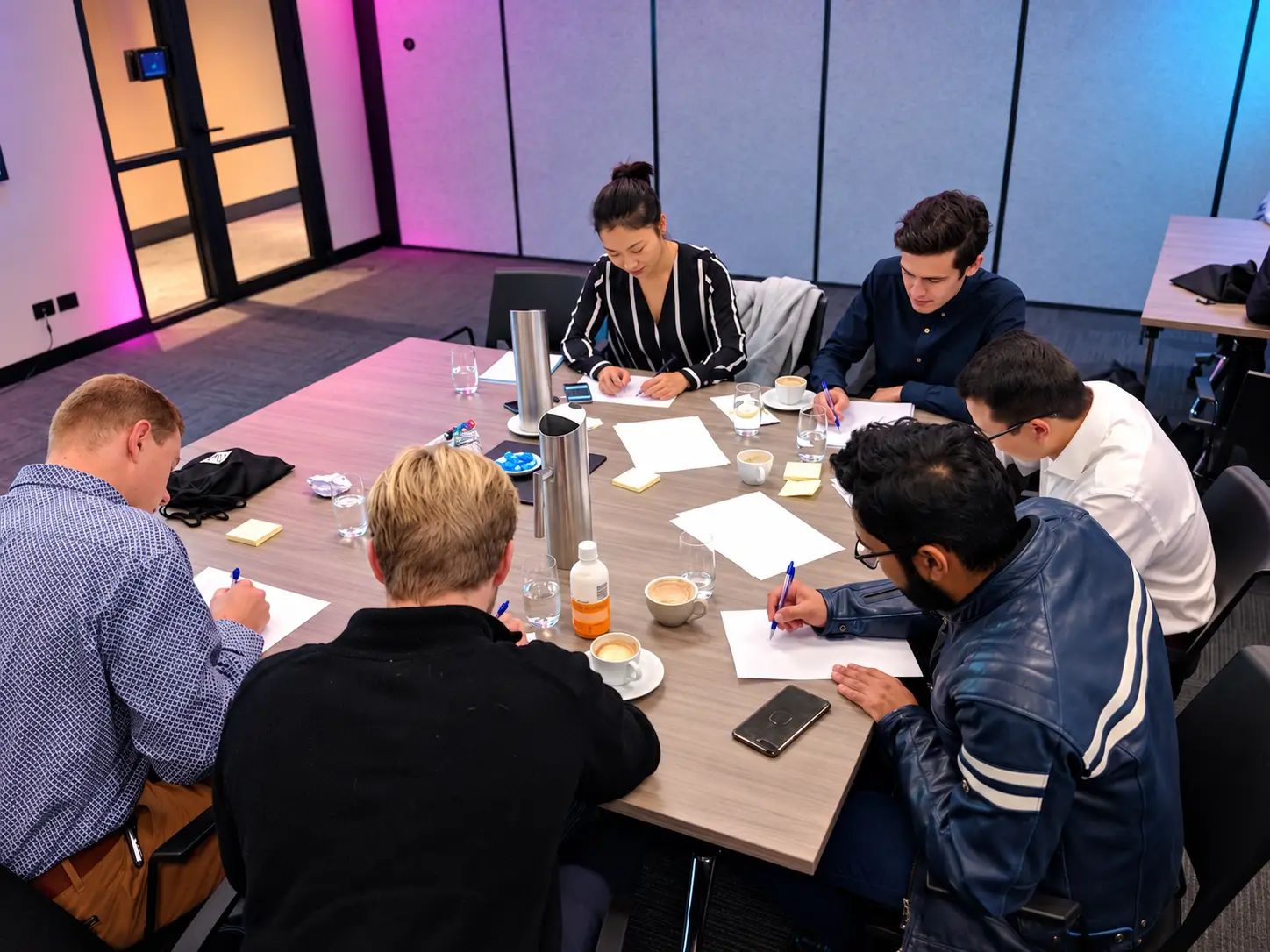
Four modules, run as in-person workshops or live online sessions, with practice tasks in between.
- 01
Thinking in the AI era
How AI gets things wrong: errors, bias and false confidence. The difference between handing over the typing and handing over the thinking. Exercise: find the flaws in an AI-written memo before the reviewer does.
- 02
Trust, but verify
A simple verification ladder for AI output. Checking sources, figures and citations. Exercise: verify an AI research note that hides two fabricated citations.
- 03
Judgement calls and escalation
Professional scepticism, confidentiality and approved tools. Questions that test any claim. Raising a concern early and clearly. Exercise: work through scenarios from your own organisation and make the call.
- 04
Redesign your own workflow
Where AI fits in your work, and where it doesn't. Building review points into the flow and recording what you checked. Exercise: redesign one real workflow with judgement built in.
Who it's for
Who it's built for
Graduates first. Then managers and reviewers. Then the whole organisation.
Graduate cohorts
New starters in their first year, in any function. The earlier the habit forms, the better.
Graduate program and L&D leads
The people who own the intake and want grads trusted with real work, not just fluent with the tools.
Managers of new starters
The people reviewing grad work. They can have their own track, so the standard holds on both sides of the review.
Format and logistics
How it runs
We've been running capability building programs for organisations across the globe since 2015.
Delivery
In-person workshops or live online sessions, with practice tasks between sessions.
Tailoring
Scenarios built from your own work, policies and approved AI tools.
Certification
Graduates can earn Certified Critical Thinker on a real decision from their own work.
Scale
Start with one cohort, then extend it to managers, reviewers and the wider organisation.
Testimonials
What teams say afterwards
“Steve delivers insights in a naturally engaging style, ensuring you are thinking differently and challenging your biases throughout the workshop. The productivity session I undertook with our Retail team, unlocked new ways to approach work effort and measure value delivered roles. The course received 100% satisfaction with all participants stating that it was time well spent.”
“They now question everything, see things through a different lens, and have started to spread that approach throughout the business.”

Facilitator
Steve Glaveski
Founder of Collective Campus, 2× Wiley author and HBR contributor. Steve started out at EY, KPMG and the Victorian Auditor-General's Office, so he knows the graduate end of a professional firm first hand. He still leads flagship workshops.
Related programs
Pair it with
Critical thinking training for teams
The same toolkit for people who already make the calls.
Explore →
Certified Critical Thinker
A certificate earned on a real decision from the participant's own work.
Explore →
AI Training
The hands-on habit of shipping real work with AI.
Explore →
AI Governance
Guardrails for staff, and an operating model for leaders.
Explore →
FAQ
Questions we get asked
What is critical thinking training for graduates?
A practical program that teaches graduates and new starters to judge information before they act on it, including everything AI hands them. They learn when to trust an output, when to verify it, when to challenge it and when to escalate. It runs on scenarios from your own work, not logic puzzles.
Why do AI-native graduates need critical thinking training?
Because fluency isn't judgement. Grads who grew up with social media and AI are quick and comfortable with the tools, but a confident wrong answer looks exactly like a right one. When everyone has the same tools, the judgement applied to the output is what sets people and organisations apart.
Is this an anti-AI program?
No. The aim isn't to slow graduates down. It's to make them fast with AI and trusted with what they put their name to.
How is this different from your critical thinking workshop for teams?
Same core toolkit, different starting point. The critical thinking workshop for teams is for people who already make the calls. This one is built for people in their first months at work: how AI gets things wrong, how to check it, how to raise a concern and how to record what they checked so a reviewer can follow it.
Can you tailor it to our graduate program?
Yes. We build the scenarios from your work, your policies and your approved AI tools, so graduates practise on the situations they'll actually face.
Does it suit Gen Z and Gen Alpha new starters?
That's who it's built for. It respects what they bring, like speed, curiosity and comfort with digital tools, and adds the habits an employer needs from day one: scepticism, confidentiality, quality and knowing when to escalate.
Is it run in person or online?
Both. We run it as in-person workshops or live online sessions, with practice tasks in between.
Can graduates get certified?
Yes. Graduates who complete the program can earn Certified Critical Thinker, a Collective Campus certificate assessed on a real decision from their own work.
Can the managers of our graduates take part?
Yes. Managers and reviewers can have their own track on reviewing AI-assisted work and coaching graduates, so the standard is the same on both sides of the review.
Give your grads an edge AI can't copy.
Tell us about your graduate intake and the work they'll do with AI. We'll build the scenarios around it.