If you approve recommendations your team prepares, this article is about how to test one before your name is attached to it. Critical thinking for a manager is the judgement you apply while there is still time to change the recommendation: the decision itself, the evidence behind it, and what would change your mind. The traps come first, then how to run the discussion, who should be there, and what to ask before you book.
How a decision process goes wrong
Capable people miss things in predictable ways. John Hammond, Ralph Keeney and Howard Raiffa, writing in The Hidden Traps in Decision Making, trace poor decisions to the way the decision was made and, sometimes, to the mind of the person deciding. The article first appeared in 1998 and was reprinted in Harvard Business Review in January 2006. They describe decisions in which the alternatives were not clearly defined, the right information was not collected, or the costs and benefits were not accurately weighed. The first number someone hears, an option they already prefer, or money already spent can then count for more than evidence that arrives later.
The anchoring trap
The anchoring trap gives disproportionate weight to the first information received. In a hiring pack, the first salary figure can become the number the panel negotiates around, even when the interview notes suggest a different level for the role. A second figure, taken from what the role requires rather than from the pack, needs to be visible before the discussion opens. Without that second figure, the panel negotiates around the number already on the page.
The confirming-evidence trap
The confirming-evidence trap appears when a team looks for information that supports a view it already holds and discounts the rest. A proposal to retire a product may quote a red dashboard and the customers who complained, while interviews that blamed the service sit in an appendix. The review should start in that appendix. Thin contrary evidence leaves the exit better supported than it first looked, and strong contrary evidence shows the team was about to spend its effort on the wrong problem.
The sunk-cost trap
The sunk-cost trap inclines a team to continue so that money already spent still looks justified. Hammond, Keeney and Raiffa describe this as perpetuating the mistakes of the past. A supplier contract that no longer fits the work gets renewed because ending it would admit the last renewal was wrong. The question to ask is what you would choose if that spend were gone and only the work ahead remained.
The overconfidence trap
The overconfidence trap leads people to overestimate how accurate their forecasts are. A range printed to two decimal places may only be a formatting choice. The useful question is which cells are last year's actuals, and which assumption about volume or price would make the total wrong. Applied to the forecast in front of you, that question shows whether the range is evidence or formatting.
Hammond, Keeney and Raiffa argue that awareness is the start, and that managers can also change the way the discussion is run. Naming the traps and then turning straight to the first figure on the slide leaves the group working from that figure.
Running a premortem
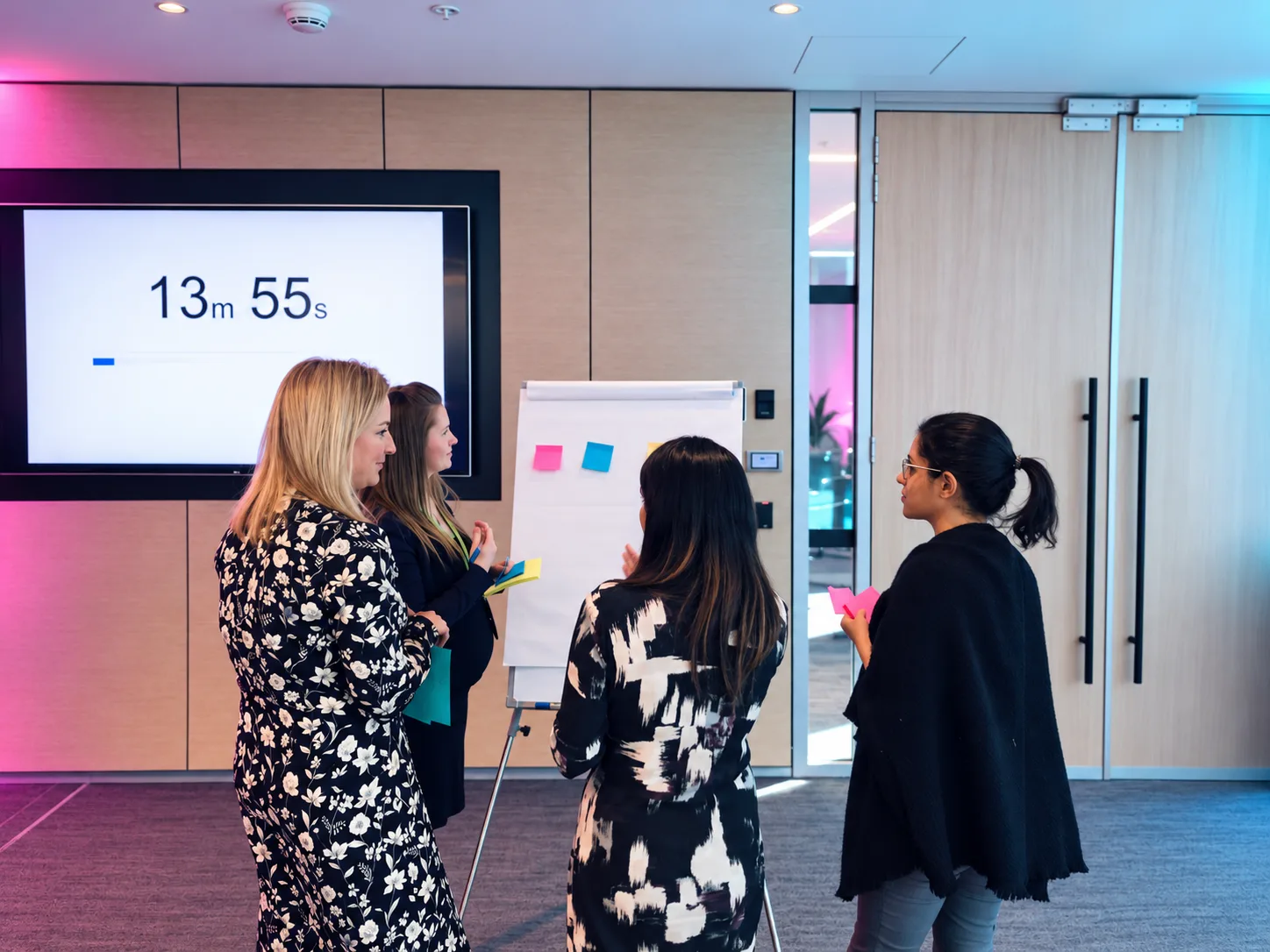
Knowing the name of a trap is different from hearing the objection in the meeting. Gary Klein's premortem, published in Harvard Business Review, has the group imagine that the decision has already failed, and each person says why. People will name dangers in that imagined failure that they will not offer as a criticism of a plan they have just defended. It should happen before you approve, with the first reasons written down while the recommendation can still be changed.
Using information you already have
Klein's premortem draws out risks people can imagine. Decisions Without Blinders, also in Harvard Business Review, describes a different miss: information the decision makers already had, and still overlooked. An earlier review can sit in the folder while the recommendation is written from the latest chart alone. The question to put beside the premortem is what you already held and did not let into the decision. A lively discussion of risks the group invented can still leave that file unopened.
Making it possible to disagree
People give you the uncomfortable version when they believe it is safe to do so. Harvard Business School's page on Amy Edmondson describes psychological safety as the belief that you can raise a question, a concern or a mistake without being punished or humiliated. In a premortem, your reaction to the first hard comment teaches the group more than a slide about candour. If that comment is set aside, the rest of the session stays polite, and you leave with the recommendation you arrived with.
How to run the session
The session works better when the decision is stated in one sentence the group can repeat, and when the evidence that would change it is written where everyone can see it. Your own preference can wait until other people have spoken. If you give the answer at the start, people wait for it, and you learn little about how they will handle the meeting when you are not walking them through the steps. The session should end with a named person who will check the uncertain point and report what they found.
Who should attend
The manager who will make the call and the people who built the case belong in the same booking. A debrief that splits them leaves the next meeting unchanged, because the people who will write the next recommendation never hear the objection, and the manager never hears how the recommendation was built.
A public course or your own case
A public course has to teach the method on a case written for people who do not arrive with one shared recommendation, so the case has to be one all of them can follow. An in-house session can use the decision this team is about to make. The public course fits when you want the method, and the in-house session fits when the next meeting needs to handle a live case differently.
The same workshop is available for teams in Sydney, Melbourne, Brisbane, Perth and Adelaide. It also runs for teams in Singapore, Hong Kong, London, New York and Toronto.
The OECD AI Principles say that AI has risks and that the people and organisations using it must be accountable, and they describe responsible AI as human-centred. For a manager, accountability means being able to explain the recommendation, including the parts a model wrote. If the source of a figure is still unknown, leave the recommendation unapproved until someone has checked it.
Where Collective Campus fits
Collective Campus has been running capability building programs for organisations across the globe since 2015. Critical thinking training is the session for a team that wants to get better at decisions it already makes. A brief that is wider than one decision, such as how the group sets direction across the quarter, belongs with the leadership development workshop. Where the problem is the way the team works together week to week, the high performance teams program is the closer fit. The critical thinking quiz is a short check of the critical thinking session before you enquire.
What to ask before you book
Before you book, including with Collective Campus, ask what the team will work on. Treat a useful reply as one that names the decision this team is about to make. A reply that only describes the course has not yet told you whether the next meeting will run differently.
- The session uses a decision this team is about to make, rather than a case written for every client.
- Most of the time is spent on that decision, and the group leaves with the evidence that would change it written down.
- You can see how the leader responds when someone disagrees, because that response is what the team will copy in the real meeting.
- The provider can describe how the team will use the AI tools it already has, on the case it brought.
Questions buyers ask
Managers tend to ask a few practical questions before they enquire. The answers below are concrete enough to take into a conversation with a provider.
What should leaders practise in a critical thinking session?
They should leave able to state the decision, name the evidence that would change it, and say who will check the uncertain point. A recommendation the team is about to send is better material for that practice than a case about a fictional company.
How is this different from a public decision-making course?
The question for the provider is whether your team can bring the case it will face next. If every client works through the same fictional company, the booking is an introduction to the method, and your next meeting has no particular reason to run differently.
What if there is only time for a short session?
A shorter session can still be useful when it stays on one live recommendation. A long discussion of a fictional company teaches the vocabulary and leaves the next recommendation untouched. Working the recommendation the team will actually send gives the meeting something it can use.
What is a premortem, in plain terms?
A premortem is the check Gary Klein described: the group pretends the decision has already failed, and each person says why. It works when people will say the uncomfortable reason aloud. If the group has not agreed that the first hard comment will be written down and answered, the list fills up with safe risks.
Can the session use a case a model helped draft?
A session can use a case a model helped to draft. The manager still explains the recommendation, including which parts a model wrote and which a person checked against a source. Bringing a figure whose source is unknown gives the group a concrete thing to resolve before the meeting.
When should a team book a leadership development workshop instead?
The leadership development workshop fits a brief about how this group leads, across more than one decision. Critical thinking training fits a team that needs practice on decisions it is already making. Matching the booking to that difference keeps the session aimed at the question you actually have.